
UM/UIM Coverage: A Las Vegas Rider's Real Backstop When the Other Driver Is Uninsured
You can do everything right on your bike and still get wiped out by a driver who carries almost no insurance, or none at all. In Las Vegas, that is not a rare piece of bad luck. It is a common outcome, and the coverage that saves you is one most riders never think about until the day they need it.
Why 25/50/20 Is Not Enough for a Serious Crash
Nevada requires drivers to carry liability limits of 25/50/20. That means as little as $25,000 for the injuries of one person, $50,000 total per accident, and $20,000 for property damage. Those numbers sound like a floor, and they are, but a serious motorcycle crash blows right through them. One ambulance ride, an emergency room visit, imaging, and a single surgery can pass $25,000 before you ever leave the hospital. When the driver who hit you carries only the state minimum, that minimum is the ceiling on what their policy will pay, no matter how badly you were hurt or how clearly the crash was their fault. Everything above their limit becomes your problem unless you have coverage of your own that steps in.
Las Vegas Traffic Is Built to Test Those Limits
This valley moves millions of visitors a year, and the roads reflect it. The Strip, I-15, and the resort corridors are full of rental cars driven by people who do not know the streets, rideshare drivers watching an app instead of the road, and out-of-state plates that vanish the next morning. Layer on the drivers who carry no insurance at all, and the odds that the person who hits you cannot cover your injuries go up fast. A rider on US-95 or heading out SR-160 toward Pahrump is sharing the road with a constant churn of drivers who are underinsured, uninsured, or gone before the dust settles. The state minimum was never designed for that reality, and it certainly was not designed to make an injured motorcyclist whole.
How UM and UIM Coverage Protect You
Uninsured and underinsured motorist coverage sits on your own policy and pays for your injuries when the at-fault driver cannot. This is the coverage that actually has a rider's back.
- ✓ Uninsured motorist coverage. Pays your injury costs when the driver who hit you had no liability insurance, or in a hit and run where the driver is never found.
- ✓ Underinsured motorist coverage. Fills the gap when the at-fault driver carries only the 25/50/20 minimum and your damages run well past it.
- ✓ Stacking. Nevada allows UM/UIM limits to be stacked across covered vehicles in many situations, which can multiply the protection available to you when you need it.
- ✓ Coverage you control. Unlike the other driver's policy, this is protection you choose and pay for, so the limits are yours to set high enough to matter.
Check Your Own Policy Before You Need It
Most riders have never read the declarations page of their own policy, and that is exactly where the answer lives. Pull it out and look for the UM/UIM line. If it says the same 25/50/20 as the state minimum, or if the coverage was declined, you are carrying the same thin protection as the drivers you are worried about. Ask your agent what it costs to raise those limits, ask whether stacking applies to your vehicles, and make sure the motorcycle itself is covered the way you think it is. This is a cheap fix to make before a crash and an impossible one to make after. If you have already gone down and you are not sure what coverage applies, do not take the insurer's word for what your own policy owes you. Have someone read it who works these claims for a living.
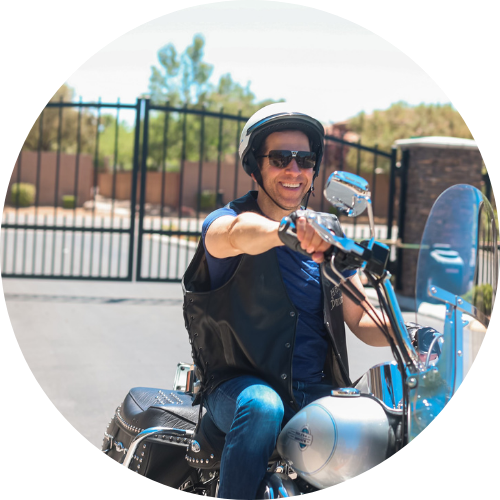
Eric Blank and the motorcycle accident lawyers in Las Vegas at Eric Blank Injury Attorneys represent riders hurt by negligent drivers. If you have questions after a crash, their team is here to help.
