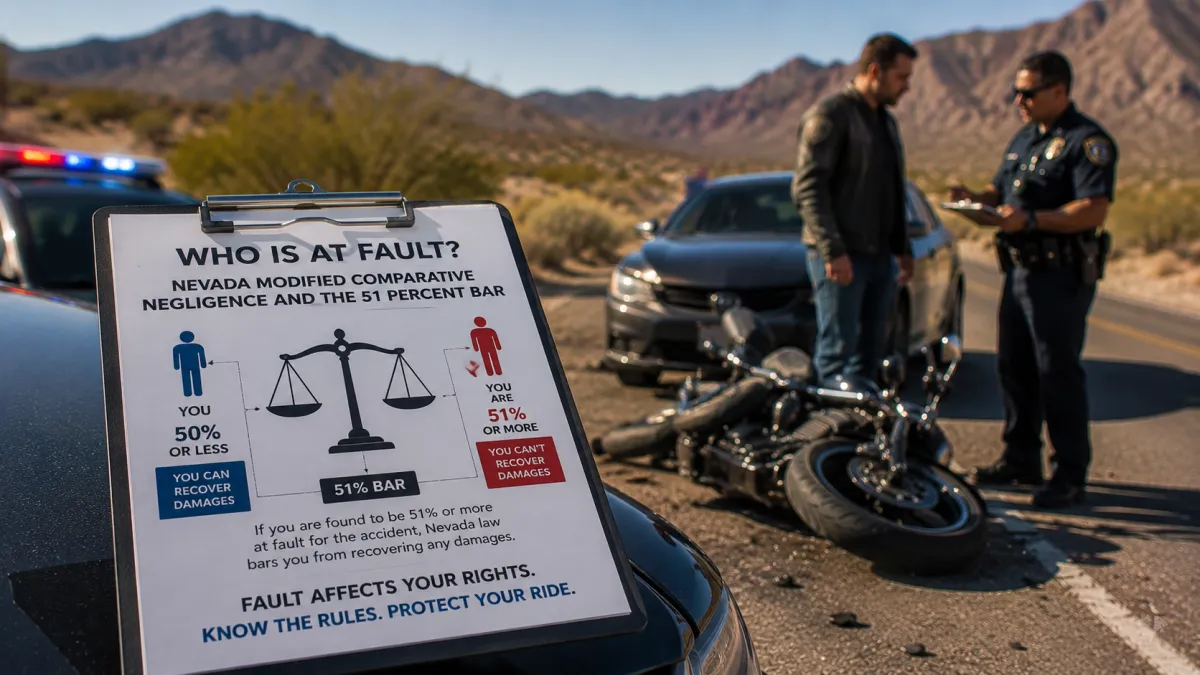
Who Is at Fault? Nevada Modified Comparative Negligence and the 51 Percent Bar
After a crash, the other driver's insurer often has one goal: pin enough blame on the rider to pay little or nothing. Understanding the Nevada fault rule keeps you from accepting a bad answer.
Modified comparative negligence, explained
Nevada uses modified comparative negligence with a 51 percent bar. You can recover if you are not more than 50 percent at fault, reduced by your share. If your damages are 100,000 dollars and you are found 30 percent at fault, you can still recover 70,000. But if you are found 51 percent or more at fault, you recover nothing. A split-fault wreck is not worthless.
The bias riders face
Motorcyclists are often blamed by default. Witnesses and even officers can assume the rider was speeding or weaving. That is why scene evidence, photos, and independent witnesses matter so much. Fault is argued, not assumed, and good evidence shifts the argument and your share of it.
Common shared-fault situations
Left-turn crashes, lane-change collisions, and intersection wrecks frequently involve disputes over who had the right of way and who could have avoided the crash. Lane position and visibility get raised, and so does lane splitting, which is illegal in Nevada and would be used against a rider who did it. Because the 51 percent bar can wipe out a recovery entirely, keeping your share of fault down is not academic. A clear record of the other driver's error is your best protection.
Every crash is different. This is general information about Nevada law, not advice about your case.
